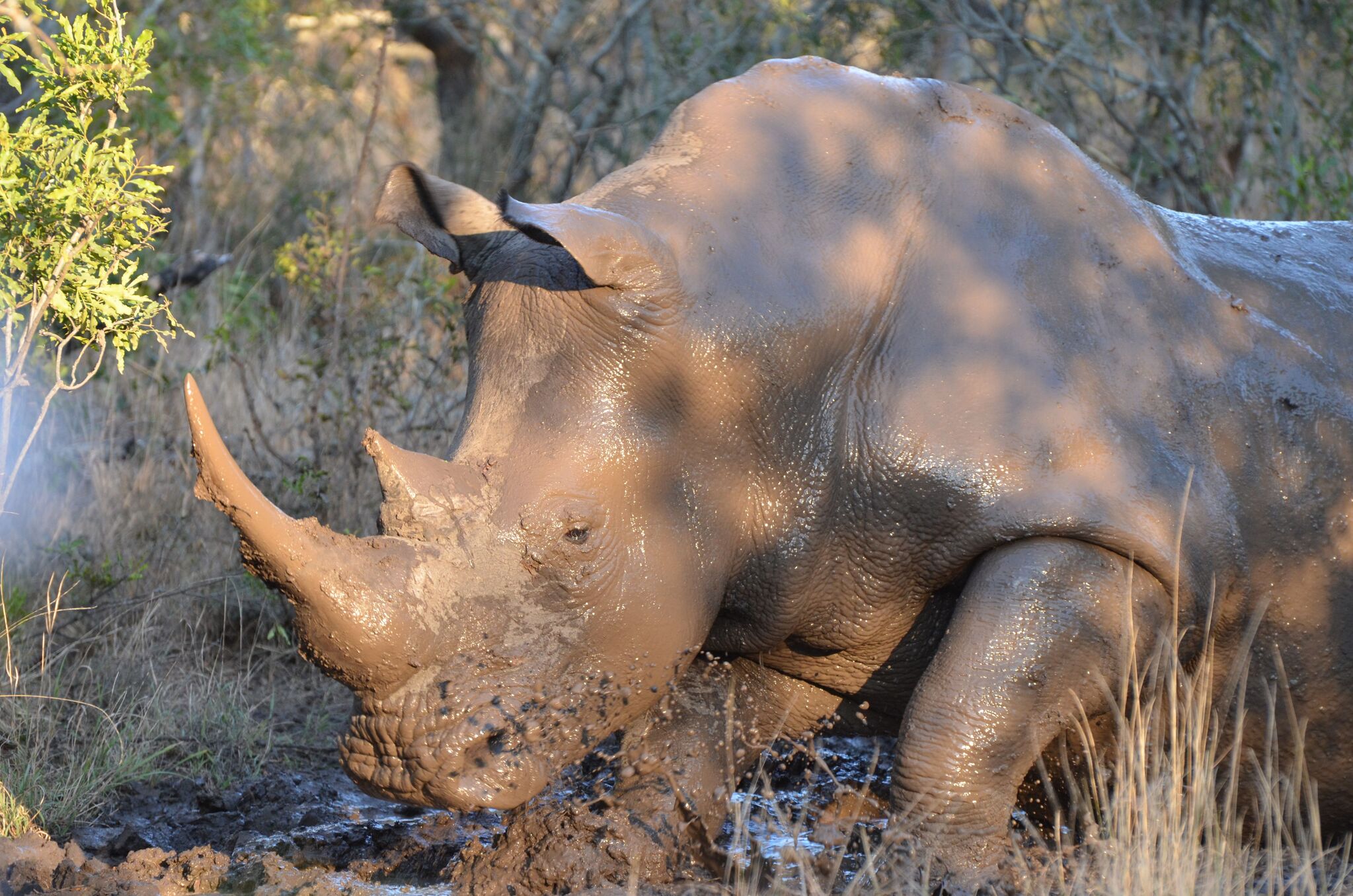
Why Do Rhinos Roll in Mud? The Dirty Truth Behind Africa's Muddiest Mystery
f you've ever been on safari and watched a two-tonne rhino flop into a mud wallow with all the grace of a toddler doing a belly flop, you've probably asked yourself: why on earth is it doing that?
Turns out, rolling in mud isn't rhino clumsiness. It's one of the smartest survival strategies in the African bush — and once you know the reasons behind it, you'll never look at a muddy rhino the same way again.
1. It's Sunscreen (Without the SPF Label)
Rhinos have thick skin — literally, up to 5cm thick in places — but that skin is surprisingly sensitive to sunburn. Unlike elephants, rhinos don't have a built-in cooling system of flapping ears, and their sparse hair offers zero protection from the equatorial sun. A fresh coat of mud acts as a natural sunblock, shielding their skin from UV rays during Kenya's blazing midday heat.
2. Nature's Air Conditioning
Mud wallows double as a rhino's personal cooling unit. As the wet mud dries on their skin, it draws heat away from the body, helping regulate their temperature in a landscape that regularly climbs past 30°C. Think of it as the original spa treatment — minus the soft music and cucumber water.
3. Bug Repellent, Rhino-Style
Ticks, tsetse flies, and other biting insects are a constant nuisance for large mammals in the bush. A thick layer of dried mud creates a physical barrier that pests struggle to bite through, making mud one of the most effective (and free) insect repellents on the savannah.
4. Healing Power for Cuts and Scrapes
Rhinos aren't exactly delicate creatures — territorial disputes, thorny thickets, and rough terrain all take their toll. Mud helps soothe irritated skin and can protect open wounds from infection as they heal, acting as nature's antiseptic bandage.
5. A Social Calling Card
Mud wallows aren't just practical — they're social hubs. Rhinos often return to the same wallow repeatedly, leaving behind scent markers that communicate territory boundaries and reproductive status to other rhinos passing through. In a species known for being largely solitary, the wallow is where the real gossip happens.
Where to See This Behavior on Safari
Mud-wallowing is easiest to spot during Kenya's warmer, drier months, when rhinos actively seek out water sources to cool down. Lake Nakuru National Park and Ol Pejeta Conservancy are two of the best places in Kenya to witness this behavior up close, both home to healthy populations of black and white rhino.
If you're planning a safari and want the best chance of catching a rhino mid-wallow, timing your game drives for mid-morning or late afternoon — when temperatures peak and rhinos head for the mud — is your best bet.
Ready to See It for Yourself?
There's nothing quite like watching a rhino cake itself in mud in real life. At Sublime Safaris, we build tailor-made itineraries across Kenya and Tanzania that put you in the right place at the right time for moments exactly like this. Get in touch and let's plan your muddy, magical rhino encounter.
www.sublimesafaris.com
Share This Story
