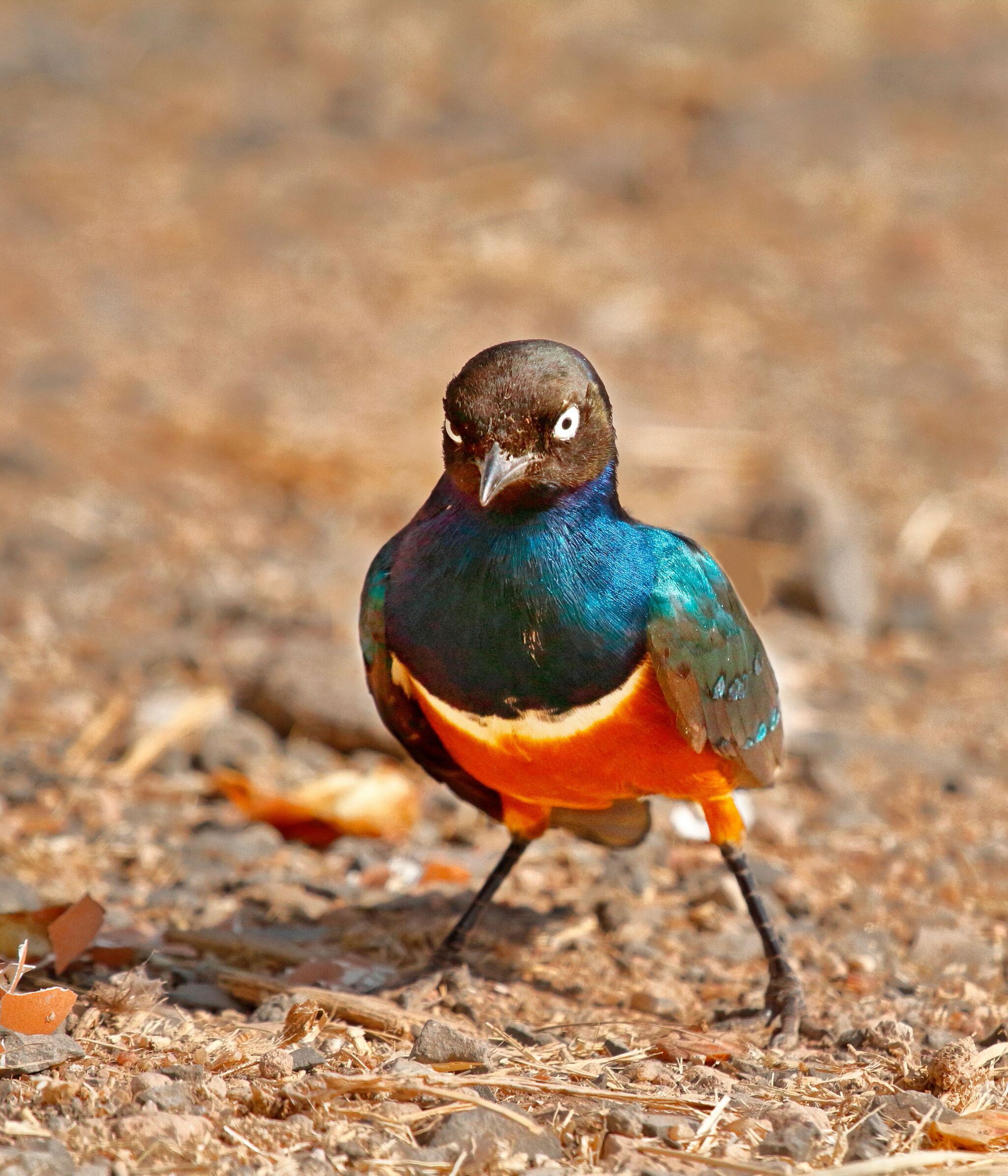
Why Are There So Many Birds in Amboseli? The Feathered Secret Behind Kenya's Elephant Kingdom
Everyone comes to Amboseli for the elephants. They walk in with their cameras pointed at Mount Kilimanjaro, their hearts set on tusks, and their expectations firmly fixed at ground level. Then a pied kingfisher dive bombs a swamp like a tiny feathered missile, a crowned crane does a dance that would embarrass most wedding guests, and suddenly half the safari vehicle is looking up.
Here is the surprise: Amboseli National Park is one of the best places for birdwatching in Kenya. Over 400 species have been recorded in a park of just 392 square kilometres. That is a lot of birds crammed into a small address.
So why do so many birds choose Amboseli? It comes down to water, habitat variety, a few lucky geographic facts, and the large grey landscaping crew that works for free. Let's break it down.
1. Mount Kilimanjaro Is Basically Amboseli's Water Tower
Amboseli sits in a rain shadow, which is a polite way of saying it is dry and dusty for much of the year. Yet the park is dotted with lush green swamps that look like they belong in a different country.
The secret is Kilimanjaro. Meltwater and rain from the mountain's slopes filter down through porous volcanic rock and travel underground, then bubble up as springs and permanent swamps inside the park. Places like Enkongu Narok, Ol Tukai and Longinye stay green and wet while the surrounding plains bake.
For birds, a permanent water source in a dry landscape is a five star resort with a free buffet. Herons, storks, ibises, egrets, cranes and kingfishers all gather where the water is, and where there is water there are fish, frogs, insects and seeds. Food draws birds. Birds draw more birds. Word gets around.
2. Five Habitats in One Park
Birds are fussy about where they live. A fish eagle wants water and tall perches. An ostrich wants open ground and room to sprint. A weaver wants thorny trees for nests.
Amboseli politely offers all of it:
- Open grassy plains for ostriches, kori bustards, secretary birds and larks
- Acacia woodland for hornbills, go away birds, barbets and weavers
- Permanent swamps and marshes for crowned cranes, herons, hamerkops and kingfishers
- Riverine and spring fed thickets for doves, bee eaters and sunbirds
- The seasonal Lake Amboseli bed for flamingos, pelicans and waders when it floods
More habitats means more niches, and more niches means more species. Amboseli is basically a bird apartment block with something for every budget and lifestyle.
3. A Seasonal Lake That Rolls Out the Welcome Mat
Lake Amboseli is mostly a dry, shimmering alkaline flat. When heavy rains arrive, it floods into a shallow lake, and the birds seem to get the message by group chat.
Great white pelicans, flamingos, avocets, stilts, sandpipers and a long list of ducks and geese turn up to feed in the shallows. The Ramsar designation of the Amboseli ecosystem, a recognition of its importance as a wetland, reflects just how valuable these waters are for birdlife.
4. Migrants Add the Bonus Round
Amboseli is not only popular with residents. Between roughly October and April, migratory birds arrive from Europe and Asia, escaping the northern winter in search of sunshine and snacks.
Think of them as the Kenyan version of retirees heading to the coast, except they are on a strict insect diet. Swallows, wagtails, waders, European bee eaters, and various raptors join the resident crowd. This is why a December visit can feel like a bird census with a safari attached, and why serious birders love the green season.
5. The Elephants Are Secret Bird Landlords
Here is the part nobody puts on the brochure. Amboseli's famous elephants do a lot of ecological work for the birds.
- They stir up insects. Cattle egrets and other insect eaters trail behind elephants and buffalo, snapping up the grasshoppers flushed from the grass. It is the original fast food drive through.
- They shape the landscape. Elephants open up woodland, dig at waterholes and trample swamp edges, which keeps a mix of open and bushy habitat.
- They fertilise everything. Dung beetles, seeds and insects all follow, and so do the birds that eat them.
So the next time you photograph an elephant, take a look at its ankles. There is a good chance a bird is making a living there.
6. Plenty of Food, From Fish to Flies
A bird park needs a big menu, and Amboseli delivers.
- Fish and frogs in the swamps feed pelicans, storks, herons and fish eagles
- Insects feed bee eaters, rollers, starlings and egrets
- Seeds and grasses feed weavers, finches, doves and francolins
- Small mammals, reptiles and carrion feed eagles, hawks, kites and vultures
- Nectar and flowers feed the sunbirds
Raptors in particular do well here, with dozens of species recorded across the park, thanks to open ground for hunting and trees for perching.
Birds You Should Not Miss in Amboseli
If you are packing binoculars, put these on your tick list:
- Grey crowned crane: Kenya's showy dancer, often seen near the swamps
- Kori bustard: one of the heaviest flying birds, strutting across the plains like it owns the place
- African fish eagle: the dramatic voice of the wild, usually perched above the water
- Secretary bird: long legs, eyelash style feathers and a talent for stomping snakes
- Great white pelican and flamingo: crowd pleasers when the lake fills
- Pied kingfisher: the hovering acrobat that dives for fish
- Hamerkop: builds enormous nests and looks permanently unimpressed
- Yellow billed stork and saddle billed stork: elegant waders with serious style
- Lilac breasted roller: a flying paint palette, and a photographer's favourite
- Taveta golden weaver: a bright yellow specialist of the region
Best Time to See Birds in Amboseli
- November to April: the best window for birders. Migrants are present, resident birds are in breeding plumage, and the landscape is green.
- June to October: the dry months. Birds concentrate around permanent swamps, which makes them easier to find, and elephant viewing peaks.
Early mornings and late afternoons are the golden hours for both light and bird activity. Pack a pair of binoculars (8x42 is a solid all rounder), a field guide, and patience.
Plan Your Amboseli Birdwatching Safari
Amboseli is easy to combine with other Kenyan parks. Many travellers pair it with Tsavo West, Tsavo East, Nairobi National Park or the Maasai Mara for a mix of big game and bird diversity. A good guide who knows the swamps and the calls will double your sightings, so choose carefully.
At Sublime Safaris, we design tailor made itineraries across Kenya and Tanzania, built around what you actually want to see, whether that is a bird checklist, elephants against Kilimanjaro, or both in one trip.
Share This Story
