What Happens to Your Mind on a Safari — The Psychology of the Wild
There is a moment, somewhere out on the savannah, when everything else falls away.
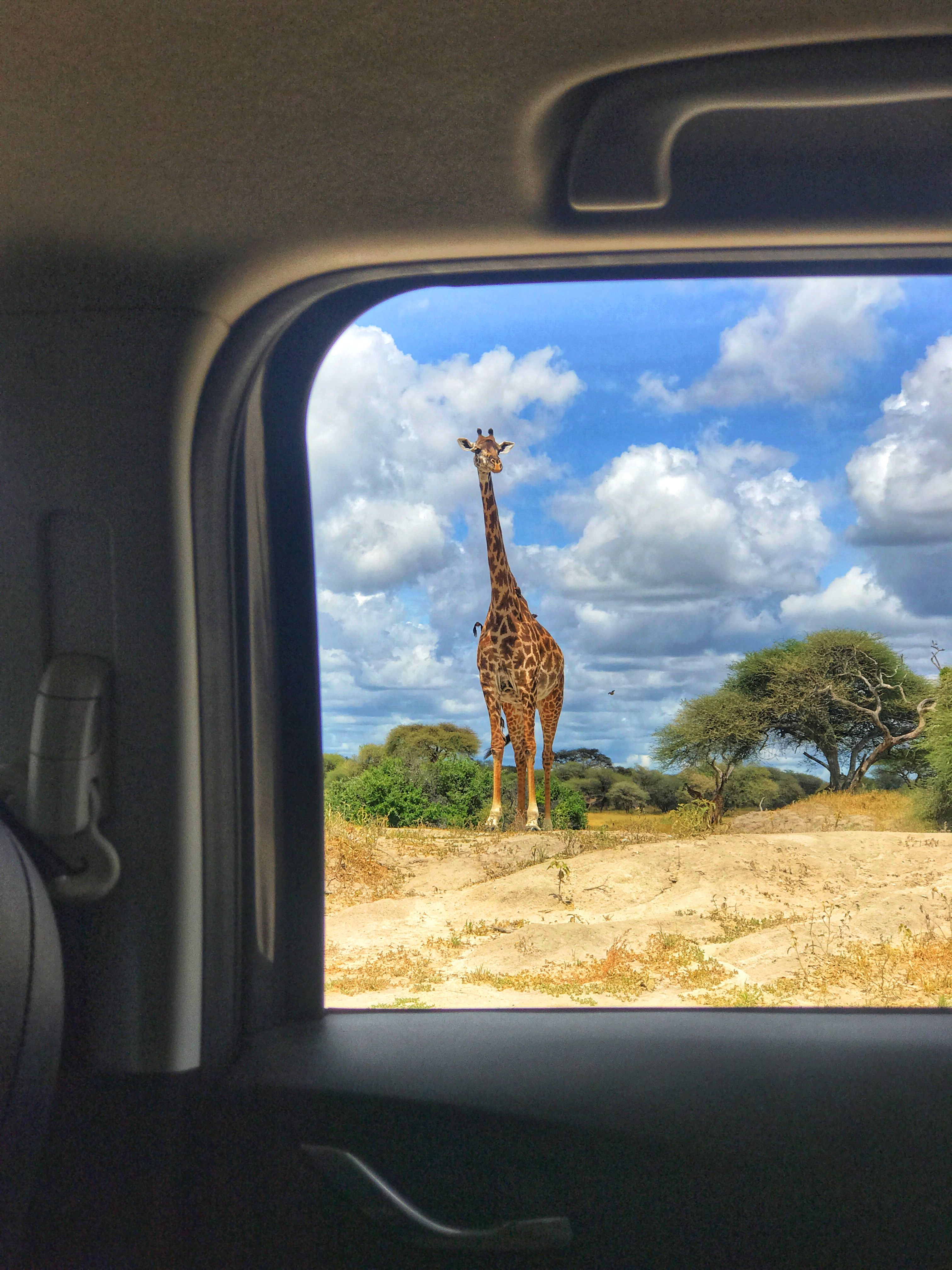
You are watching a lioness move through golden grass, utterly unhurried, utterly sovereign. Your phone hasn't buzzed in three hours. You can't remember what you were anxious about last Tuesday. The only thing that exists is the now — her amber eyes, the warm haze of the afternoon, and the sound of absolute silence beneath the wind.
That is not just a beautiful moment. According to researchers, it is your brain doing something it almost never gets to do in modern life.
At Sublime Travel, we have guided thousands of guests across Kenya, Tanzania, and the wider East Africa region, and the question we hear most often afterwards is not "which animals did you see?" It is: "Why do I feel so different?" This guide explores the science and the soul of what a safari actually does to your mind.
The Science of Awe — and Why the Wild Triggers It
Psychologists have a word for what you feel when you stand at the edge of the Maasai Mara and watch thousands of wildebeest stretch to the horizon. They call it awe — and it turns out, awe is one of the most powerful emotional states a human being can experience.
Research from UC Berkeley and the University of Toronto shows that experiencing awe causes people to feel smaller, in the best possible way. It shrinks what psychologists call the "default self" — the constant inner monologue of worries, ambitions, social comparisons, and self-consciousness that occupies most of our waking hours. When you are small before something vast and magnificent, your brain is forced to reorganise its understanding of the world.
Studies show that awe measurably reduces markers of inflammation, boosts feelings of connectedness, increases patience and generosity, and makes people more curious and open-minded. A 2015 study published in the journal Emotion found that awe was uniquely linked to lower levels of cytokines associated with depression and anxiety.
The African wilderness, perhaps more than almost any other environment on earth, delivers awe in abundance — and delivers it repeatedly, across multiple senses, throughout every single day.
Attention Restoration Theory — Your Brain on Wilderness
One of the most well-supported theories in environmental psychology is Attention Restoration Theory (ART), developed by Rachel and Stephen Kaplan at the University of Michigan. Their research showed that natural environments have a unique capacity to restore our ability to focus and think clearly — and that this restoration is qualitatively different from simply resting.
Modern life demands what the Kaplans called directed attention — the effortful, voluntary focus required to send emails, navigate traffic, manage meetings, and process an endless stream of information. This form of attention is exhaustible, and when it runs out, we become irritable, impulsive, and cognitively foggy.
Nature, by contrast, engages what they called involuntary attention — the effortless, fascinated kind that a child gives to a butterfly, or that you give to a herd of elephants moving through the dust. This type of engagement allows your directed attention systems to rest and replenish.
A safari is, in a sense, an extended immersion in exactly this restorative state. You are not passively sitting in a garden. You are actively engaged — alert, curious, present — but in a way that costs nothing. The game drive demands your attention in the most pleasurable way possible: something is always moving, always changing, always surprising. Your mind is fully occupied without being depleted.
This is why guests so often report sleeping better, thinking more clearly, and feeling more creative after even a few days in the bush.
The Digital Detox Effect — Disconnection as Medicine
There is growing neurological evidence that our near-constant exposure to screens and social media is restructuring our brains in ways that undermine deep thinking, patience, and emotional regulation. The average person checks their phone over 150 times per day. Each notification triggers a small dopamine response — enough to maintain the habit, but not enough to satisfy.
On safari, particularly in the more remote camps of northern Kenya or the Serengeti, that loop is broken. Not by willpower or discipline, but simply because there is no signal — and more importantly, because there is something so much more compelling to pay attention to.
Within 24 to 48 hours, most guests report a noticeable shift. The restlessness settles. The urge to check fades. The mind, no longer constantly interrupted, begins to think in longer, more connected ways. Conversations deepen. Reading becomes absorbing again. Sleep becomes profound.
Psychologists call this attentional recovery, and the research consistently shows that it takes meaningful disconnection — not a few minutes in a park, but sustained immersion in a non-digital environment — for it to fully take hold. A multi-day safari is one of the most effective natural contexts for achieving it.
Presence, Impermanence, and the Predator Effect
Safari does something unusual to your relationship with time. When you are on a game drive, particularly tracking predators, you exist entirely in the present moment — not because you are trying to meditate, but because the situation demands it.
A leopard may be visible for four minutes. The hunt may last less than sixty seconds. A crossing of the Mara River is chaotic, thundering, and over before you have fully processed it. There is no rewind. There is no Instagram Story that captures what it actually felt like. You either saw it or you didn't, and no amount of scrolling brings it back.
This impermanence has a quietly profound effect on the mind. Behavioural researchers have found that experiences which cannot be replicated or revisited are stored more vividly and emotionally in long-term memory. They become reference points — not just for the experience itself, but for how to be present in other areas of life. Guests who return home from safari often describe a lasting shift in how they relate to their own attention: what they choose to look at, how deeply they listen, what they bother to worry about.
Biophilia — Why We Feel at Home in the Wild
The biologist E.O. Wilson coined the term biophilia to describe what he believed was an innate human attraction to other living systems. His hypothesis — now supported by decades of research — is that human beings evolved in natural environments, and that our nervous systems are literally calibrated for immersion in the living world.
When we are surrounded by the sounds, smells, and rhythms of nature — the call of a fish eagle, the damp smell of rain on red soil, the rustling of acacia leaves in a morning breeze — something at a very deep neurological level settles into alignment.
The African savannah, in particular, has a special resonance here. Palaeontological and anthropological evidence suggests that the East African rift valley is the cradle of our species — that the landscape of Kenya and Tanzania is, in a very real sense, the landscape our minds were shaped by. The open grassland, the scattered trees, the wide horizon, the proximity of large animals — these are not exotic stimuli. For our ancient brain, they are home.
This may be why so many guests describe an emotional response to their first sight of the Mara that goes beyond mere admiration. There is recognition in it. Something ancestral and wordless that says: yes, this.
Perspective Reset — The View from Outside Your Story
One of the most commonly reported effects of a transformative travel experience — and safari is consistently ranked among the most transformative — is a profound shift in perspective.
When you spend three days watching lions raise cubs, watching elephants grieve and protect one another, watching a cheetah teach her young to hunt, watching life and death play out in the most unmediated possible way — your own anxieties have a tendency to resize themselves. The problem at work, the unresolved argument, the financial worry — they don't disappear. But they are placed, briefly, in a context so much larger than themselves that they lose some of their tyranny.
Researchers studying post-travel psychological change have found that immersion in genuinely different environments — particularly natural ones — activates what they call cognitive flexibility: the brain's capacity to hold multiple frameworks simultaneously, to question previously unconscious assumptions, and to imagine alternative possibilities.
Guests often return from safari not just rested, but reconsidered. With fresh ideas about work, about relationships, about what they actually want. This is not a side effect of travel. On a well-designed safari, it is almost the point.
The Campfire and the Ancient Brain
There is one final element of the safari experience worth naming: the campfire.
Anthropological research by Christopher Lynn at the University of Alabama found that gazing at fire produces measurable decreases in blood pressure and promotes a deeply relaxed, socially open state of mind — what he calls a "flow-like" condition. Humans are the only species that uses fire deliberately, and we have been doing so for at least 1.5 million years. Our brains are wired for it.
Every night on safari, after the game drive, as the bush cools and the stars emerge and the hyenas call in the distance, there is a fire. And around it, guests who were strangers at the airport two days before find themselves in the kind of conversation that rarely happens anywhere else — honest, unhurried, stripped of the usual social performance. The shared experience of the wild creates an unusual intimacy. The firelight does the rest.
This, too, is what happens to your mind on a safari.
Plan Your Transformative East Africa Safari with Sublime Travel
We believe a safari is not just a holiday. It is one of the most complete experiences a human being can have — sensory, emotional, intellectual, and deeply restorative all at once.
At Sublime Travel, we design bespoke East Africa safaris across Kenya, Tanzania, and Zanzibar — from the great wildebeest migration in the Maasai Mara to the elephant herds of Amboseli, the flamingo lakes of the Rift Valley, and the spice-scented coast of Zanzibar. Every itinerary is crafted to give you not just the highlights, but the depth.
If you are ready to see what the wild does to your mind, we would love to help you plan it.
📧 sublimetravellimited@gmail.com
📍 Airport North Road, Nairobi, Kenya
call +254110090711
Share This Story
