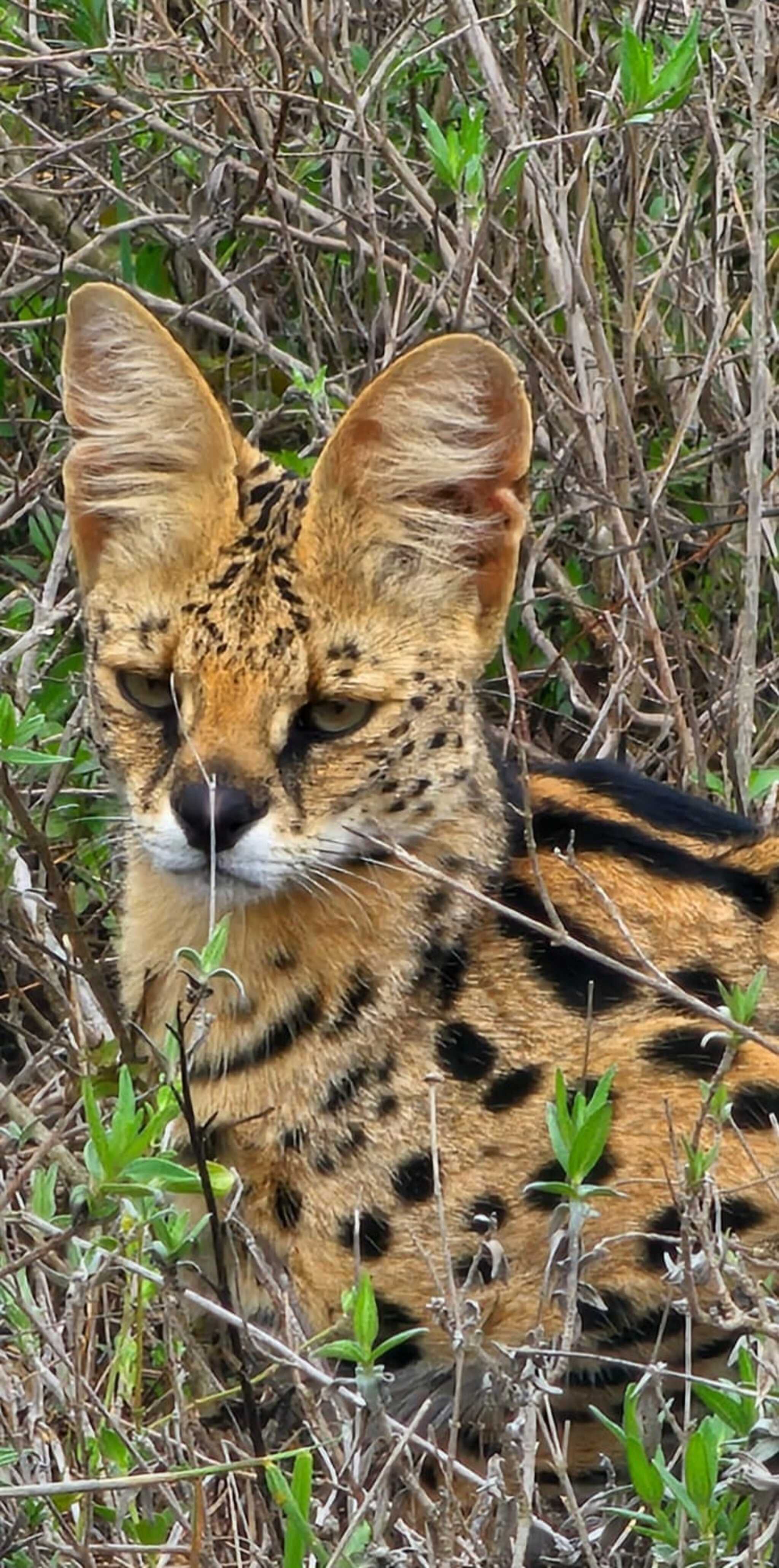
Serval Cat: The Long Legged, Big Eared Acrobat of the African Savannah
Imagine a house cat that went to the gym every day for five years, borrowed a pair of satellite dishes for ears, and stole the legs of a supermodel. Congratulations, you have imagined the serval cat.
If you have ever been on a game drive and missed one, do not feel bad. The serval cat is the master of “now you see me, now you really do not.” But once you spot one, you will understand why safari guides in Kenya get weirdly emotional about them.
What Is a Serval Cat?
The serval cat (Leptailurus serval) is a medium sized wild cat found across sub Saharan Africa. It is slender, spotted, and built like a feline Formula One car. Adults usually weigh between 8 and 18 kg and stand about 54 to 62 cm at the shoulder, so no, it is not a lion, but nobody told the serval that.
The name comes from the Portuguese words for “deer wolf,” which is a bold thing to call a cat that spends its day politely listening to grass.
Serval Cat Facts That Will Win You Every Dinner Party
The ears are a superpower. The serval cat has the largest ears relative to head size of any wild cat. Those ears can pinpoint a rodent moving underground. Think of it as a built in radar with excellent fashion sense.
The legs are record breaking. Servals have the longest legs relative to body size of any cat. This lets them look over tall grass like a periscope and launch themselves skyward.
The jump is ridiculous. A serval can leap up to 3 metres into the air to snatch a bird in flight, and cover several metres horizontally in a single pounce. Birds have filed complaints. Nobody is listening.
The hunting record is elite. Lions miss most of the time. A serval cat succeeds in roughly half of its hunts, which is one of the best strike rates of any cat on Earth. It eats rodents, birds, frogs, reptiles and insects, and it will even reach into burrows with those long front legs like someone searching for the TV remote under the sofa.
The spots vary. Some servals have bold spots, some have tiny speckles, and some are melanistic, which means they are almost entirely black. Black servals are famously reported in the cool highlands of the Aberdare Ranges in Kenya, a lovely bonus for anyone who enjoys a good wildlife mystery.
Serval Cat Habitat: Where Does This Cat Live?
Servals love water. Unlike many cats that treat a puddle like a personal insult, the serval cat thrives near wetlands, marshes, riverbanks and long grassland. Tall grass gives it cover, and nearby water means plenty of frogs, rodents and birds.
You will not find servals in true desert or dense rainforest. They like open, grassy habitats with a bit of drama.
Where to See a Serval Cat in Kenya
Kenya is one of the best countries in Africa for serval cat sightings, if you know where and when to look. Strong options include:
- Maasai Mara National Reserve: Open grassland and plenty of rodents make this a top spot, especially in the early morning.
- Ol Pejeta Conservancy: Great for patient wildlife watchers and night drive fans.
- Nairobi National Park: Yes, a serval cat in a park with the city skyline behind it. Kenya does not do ordinary.
- Aberdare National Park: The place to hope for a black serval.
- Lake Naivasha area: Wetlands, birdlife and tall grass add up to serval territory.
- Amboseli National Park: Swampy areas near the elephants can reward careful eyes.
In Tanzania, the Ngorongoro Crater and parts of the Serengeti also offer decent chances.
Best Time to See a Serval Cat
Servals are most active at dawn and dusk, which are also the golden hours for photographers, so the universe is at least trying to help. Midday is nap time. Go out early, drive slowly, and stop often. Switch off the engine and listen. Your guide might hear the rustle before you ever see the cat.
Pro tip: look for a pair of ears first. If the grass has ears, that is your serval.
Serval Cat Behaviour and Life Cycle
Servals are mostly solitary, and each cat patrols a territory, marking it with scent and urine. Females give birth after a gestation of about 66 to 77 days, usually to one to four kittens hidden in dense vegetation or a burrow. In the wild a serval may live about ten years, and longer in captivity.
Mothers are devoted and fierce. Moms of the savannah, we salute you.
Is the Serval Cat Endangered?
Globally, the serval cat is listed as Least Concern by the IUCN, which is good news. Locally, however, wetland loss, poaching, and conflict with people can push populations down. Protecting grasslands and wetlands protects servals, and responsible tourism helps fund exactly that.
Serval Cat as a Pet? Please Do Not
Hybrid servals such as Savannah cats have made servals popular online, but wild servals are not pets. They need space, a wild diet and the freedom to leap three metres at a pigeon. The best way to enjoy a serval cat is to watch one in its natural habitat, on safari, with binoculars and zero guilt.
Plan Your Serval Cat Safari in Kenya
Spotting a serval cat takes timing, patience and a guide who knows where the long grass hides its secrets. At Sublime Safaris, we design tailor made itineraries across Kenya, Tanzania and Zanzibar that put you in the right place at the right hour, whether you want a budget friendly game drive or a luxury lodge stay with sunrise coffee and a serval or two.
www.sublimesafaris.com
Share This Story
