Samburu Kenya Safari: The Ultimate Guide to Northern Kenya's Wild Frontier
Few places in Africa stop you in your tracks quite like Samburu. Remote, raw, and achingly beautiful, Samburu Kenya sits in the semi-arid north of the country — a world away from the polished circuits of the Masai Mara. Here, ancient red-soiled plains stretch to volcanic hills, the Ewaso Nyiro River pulses with life, and wildlife found nowhere else in Kenya roams freely. If you are planning a Kenya safari and want something genuinely off the beaten path, Samburu National Reserve deserves a prime spot on your itinerary. In this guide, Sublime Travel breaks down everything you need to know — from the famous Samburu Special Five animals to the best camps, the ideal time to visit, and practical tips for getting there.
Where Is Samburu, Kenya?
Samburu National Reserve is located in Samburu County in northern Kenya, approximately 350 kilometres north of Nairobi. It covers an area of around 165 square kilometres and sits at an elevation of roughly 900 metres above sea level. The reserve is part of a larger protected ecosystem — the Samburu-Laikipia ecosystem — which also includes Buffalo Springs National Reserve and Shaba National Reserve directly across the Ewaso Nyiro River. Together, these three reserves form one of the most important wildlife corridors in East Africa, linking northern Kenya's wilderness with the broader landscape all the way to Laikipia Plateau. This geographic context matters: Samburu is not just a standalone park but a gateway to Kenya's vast, wild north — a region that remains largely off the mainstream safari radar and all the more rewarding for it.
The Samburu Special Five: Wildlife You Won't Find Anywhere Else in Kenya
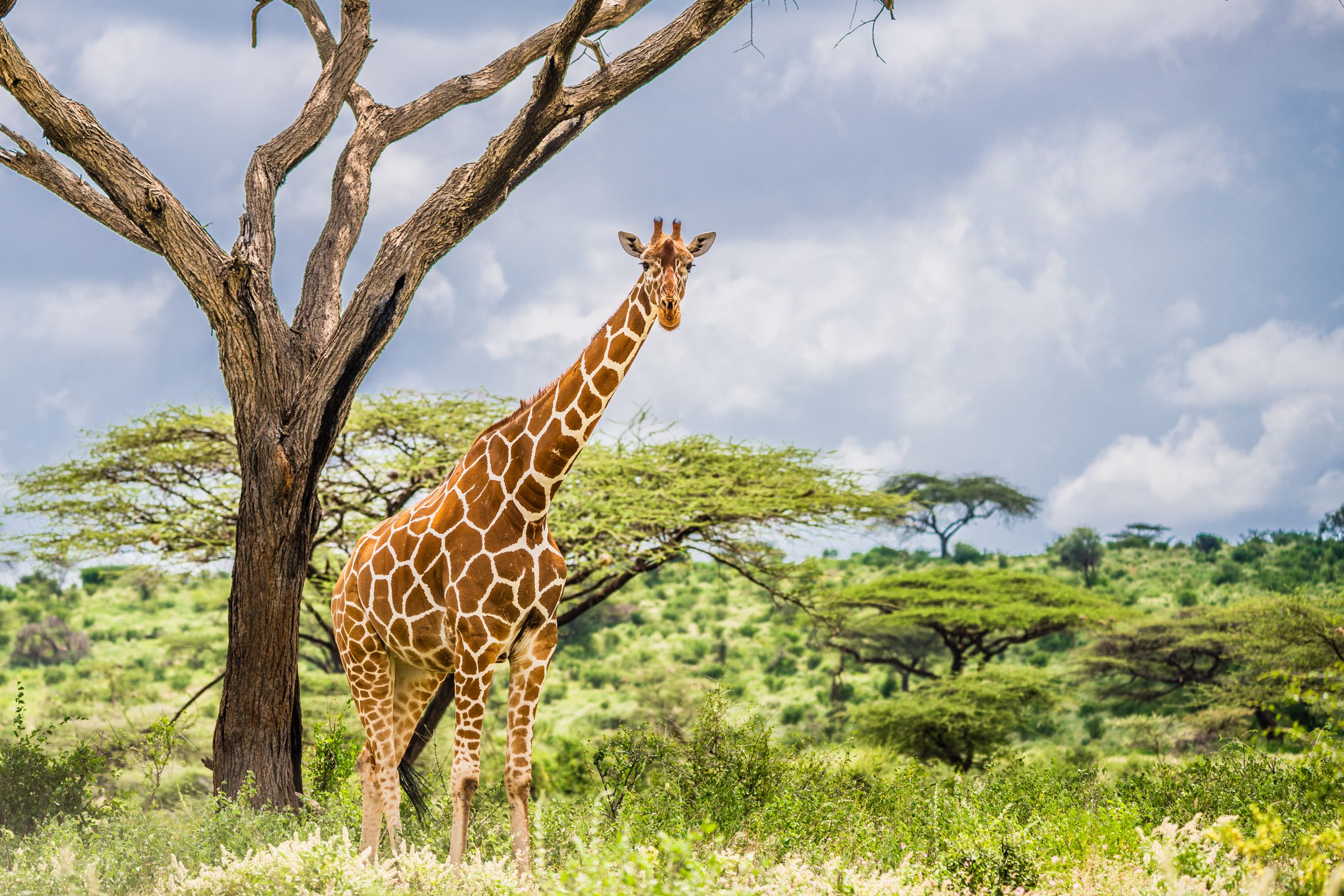
The single biggest reason travellers choose a Samburu safari is the chance to see the Samburu Special Five — five rare and endemic species uniquely adapted to the dry northern landscape. These animals are not found in the Masai Mara or Amboseli, which makes Samburu genuinely irreplaceable on any serious Kenya wildlife itinerary. The reticulated giraffe is the most visually striking of the five, distinguished by its large chestnut patches separated by bold white lines — taller and more dramatically patterned than the Maasai giraffe of southern Kenya. The Grevy's zebra, the world's largest and most endangered zebra species, roams Samburu's open plains with narrow closely-spaced stripes and large rounded ears that set it apart immediately. The Somali ostrich turns vivid blue during breeding season, a spectacle that consistently surprises first-time visitors. The Beisa oryx is an elegant antelope with long straight horns and striking black-and-white facial markings, perfectly adapted to arid conditions and frequently spotted in the open flats. Perhaps the most charismatic of all is the gerenuk, a long-necked antelope famous for browsing while standing completely upright on its hind legs — a behaviour so extraordinary it almost defies belief the first time you witness it. Beyond the Special Five, Samburu supports healthy populations of elephant, lion, leopard, cheetah, wild dog, hippo, crocodile, and over 450 bird species.
Best Time to Visit Samburu, Kenya
Samburu is a year-round safari destination, and because the reserve receives significantly less rainfall than southern Kenya, game drives remain productive even during the wetter months. The peak season runs from June through October, when vegetation thins dramatically, animals concentrate along the Ewaso Nyiro River, and predator sightings become more frequent. The best camps fill quickly in July and August, so booking well in advance is essential. The second dry season, from January through March, offers equally strong wildlife viewing with noticeably fewer visitors and a more relaxed atmosphere — arguably the most rewarding time to visit for travellers who value space and quiet. The green season in April, May, and November brings dramatic skies, lush landscapes, and spectacular birdlife. While animals can be slightly harder to spot in thicker bush, lodge rates drop significantly and the photographic opportunities are extraordinary. For experienced safari-goers travelling on a tighter budget, the green season in Samburu is one of East Africa's best-kept secrets.
Best Safari Camps and Lodges in Samburu
Samburu offers a range of accommodation from intimate luxury tented camps to well-positioned riverside lodges. Saruni Samburu is a stunning hilltop retreat with sweeping views across the reserve, offering six exclusive villas and some of the finest guiding in northern Kenya. Sasaab Lodge is architecturally distinctive — a Moroccan-inspired boutique property perched above the Ewaso Nyiro River with open-fronted suites and a dramatic rooftop pool. Elephant Bedroom Camp sits directly on the riverbank, where elephant herds regularly pass through camp, creating unforgettable encounters from the veranda. Samburu Intrepids is a well-positioned mid-range option offering consistent game drives and excellent value, particularly for families. For those wanting an authentic bush experience without the premium price tag, Saruni Basecamp delivers the same quality of guiding as its luxury sister property in a more accessible format — one of the best-value options currently available in the reserve.
Samburu Culture: Meeting the Samburu People
A Samburu safari is not only about wildlife. The Samburu people — closely related to the Maasai and part of the Nilotic pastoral tradition — have inhabited this landscape for centuries and remain an integral part of what makes northern Kenya so compelling. Semi-nomadic pastoralists, the Samburu are renowned for their vibrant beadwork, warrior traditions, and extraordinarily deep knowledge of the land. Their relationship with wildlife is not adversarial but coexistent — a perspective that has helped preserve this ecosystem for generations. Most quality camps offer guided visits to nearby manyattas, where guests can observe beading crafts, learn about community roles, and gain a genuine understanding of life on these plains. At Sublime Travel, we only partner with properties that maintain honest, community-benefit relationships with the Samburu people, ensuring tourism revenue flows directly to local families.
How to Get to Samburu National Reserve
The easiest way to reach Samburu is by scheduled light aircraft from Wilson Airport in Nairobi. Operators including Safarilink and AirKenya run daily flights to Samburu Airstrip, with a flight time of approximately 45 to 55 minutes. This is the option we recommend for all international travellers, particularly those combining Samburu with the Masai Mara, Laikipia, or the Kenyan coast. For those who prefer an overland journey, the drive from Nairobi takes approximately five to six hours via the Nanyuki road and passes through beautiful highland scenery including the foothills of Mount Kenya. Road transfers in a fully equipped 4WD vehicle are available through Sublime Travel and can be combined with stops at Ol Pejeta Conservancy or other Laikipia properties along the way.
What to Pack for a Samburu Safari
Samburu is hotter and drier than the Masai Mara, and packing appropriately makes a real difference to your comfort in the field. Lightweight, neutral-coloured clothing in khaki, tan, or olive is essential — bright colours disturb wildlife and show dust quickly. Early morning game drives can be surprisingly cold even in the dry season, so a warm fleece or light jacket is non-negotiable. High-SPF sunscreen and a wide-brimmed hat are critical given the intensity of the northern equatorial sun. A good pair of binoculars is essential for spotting the Special Five across open plains, and a camera with a zoom lens of at least 100 to 400mm will serve you well for wildlife photography. A dust-proof bag for your camera gear is strongly recommended — Samburu is exceptionally dusty in the dry months. Finally, ensure your travel insurance covers remote medical evacuation, as the nearest major hospital facilities are in Nanyuki or Nairobi.
Sample Samburu Safari Itinerary: 3 Nights, 4 Days
On day one, depart Nairobi's Wilson Airport on a morning flight to Samburu Airstrip, arriving in time for a camp transfer, check-in, and a relaxed lunch. The afternoon is dedicated to your first game drive along the Ewaso Nyiro River — one of the reserve's most productive areas for elephant, lion, leopard, and crocodile. Day two begins with an early start in the cool of the morning, maximising your chances of finding the Special Five before the midday heat sets in. Return to camp for a full cooked breakfast and a restful break, then head out again in the late afternoon for golden-hour photography and sundowners in the bush. Day three combines a morning game drive with a guided community visit to a nearby Samburu manyatta, where you observe traditional beadwork and learn how the Samburu people coexist with the wildlife around them. Where available, a guided night drive in the evening offers the chance to spot genet, civet, bush baby, and porcupine. On day four, one last sunrise game drive is followed by a transfer to the airstrip for your return flight to Nairobi or onward connection to the next destination on your Kenya itinerary.
Why Book Your Samburu Safari with Sublime Travel
Samburu is not a destination where generic, online-booked safaris deliver their best. The finest experiences here require local knowledge and genuine relationships on the ground. At Sublime Travel, we are a Nairobi-based safari company that has personally visited and vetted every property we recommend. We design tailored itineraries combining Samburu with Laikipia, the Masai Mara, Amboseli, or the Kenyan coast, and we offer access to exclusive properties and fly-camping options not bookable through standard online channels. Our pricing is transparent with no hidden costs, and our team provides 24/7 in-country support throughout your trip. Most importantly, we have long-standing relationships with community conservancies that ensure your tourism spend benefits the Samburu families who call this remarkable landscape home. Contact us today for a personalised itinerary and quote.
Frequently Asked Questions
Is Samburu worth visiting? Samburu National Reserve offers a wildlife experience that is genuinely unlike anything else in Kenya. The Samburu Special Five cannot be seen anywhere on the standard southern Kenya safari circuit, and the landscape, culture, and sense of remoteness are exceptional. For any traveller serious about Kenya wildlife, Samburu is not optional — it is essential.
How many days do you need in Samburu? A minimum of three nights is recommended. This allows for multiple game drives, a cultural community visit, and enough time to absorb the landscape. Serious wildlife photographers or birdwatchers may prefer four to five nights.
Is Samburu safe to visit? Yes. Samburu National Reserve is a secure, well-managed protected area. Booking through a licensed professional operator such as Sublime Travel ensures your logistics, safety, and in-country support are handled by people who know the destination intimately.
Can Samburu be combined with other Kenya destinations? Absolutely. Samburu pairs beautifully with Laikipia, the Masai Mara, Amboseli, and the Kenyan coast. Sublime Travel specialises in multi-destination Kenya itineraries connected by internal flights.
What is the Ewaso Nyiro River? The Ewaso Nyiro is the ecological lifeline of Samburu National Reserve. It attracts concentrations of elephant, hippo, crocodile, and predators throughout the year — particularly in the dry season when surface water elsewhere disappears. Game drives along the riverbank are consistently among Samburu's most productive wildlife experiences, and the sight of an elephant herd crossing the river against a backdrop of doum palms and red hills is one of Kenya's most enduring safari images.
Share This Story
