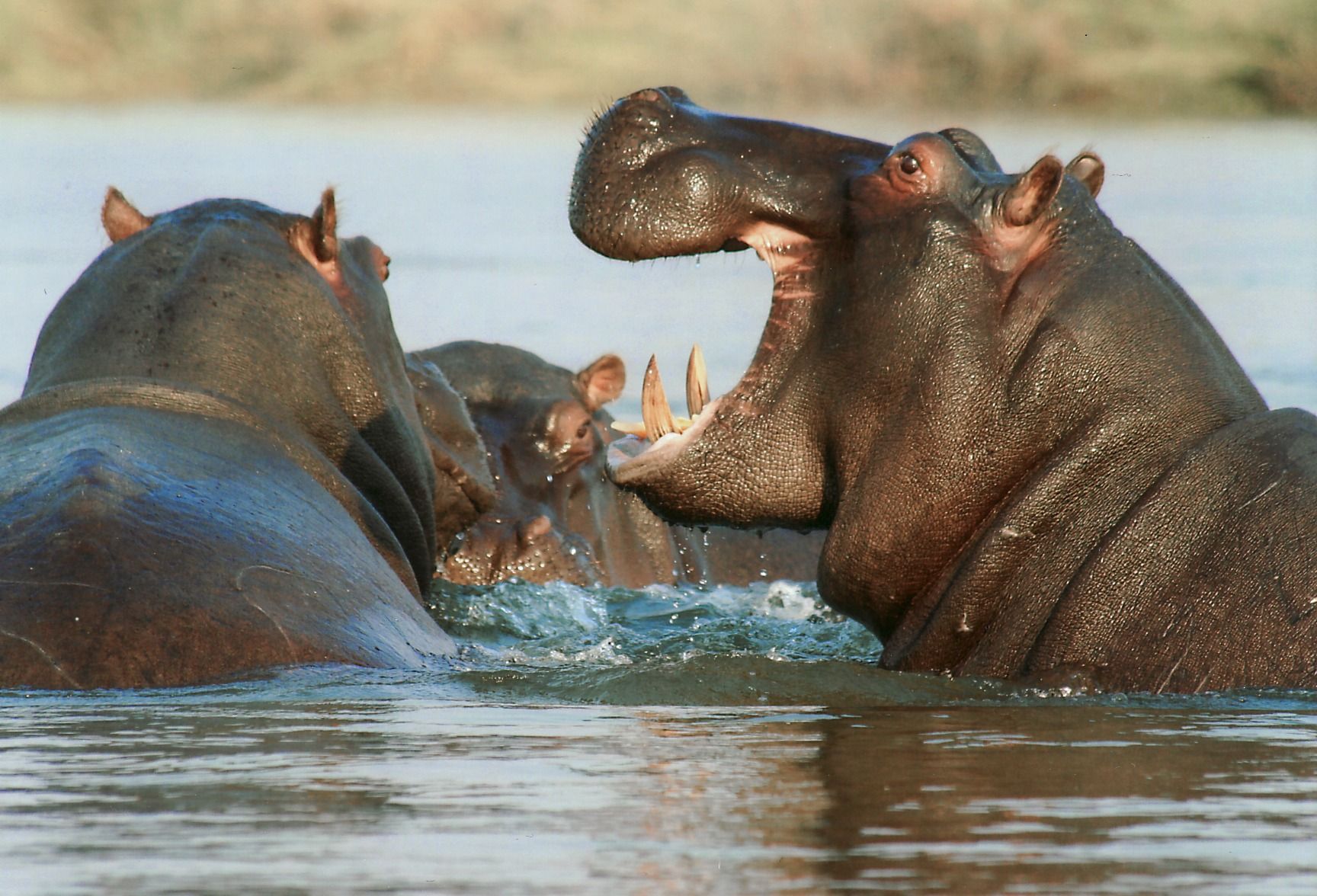
Hippos: Africa's Most Dangerous Animal Is Also Its Biggest Drama Queen
Everyone books a safari dreaming of lions. Almost nobody books one dreaming of hippos. This is a mistake, and frankly, a little insulting to the animal responsible for more human deaths in Africa each year than lions, leopards, and buffalo combined. Hippos don't get the glossy brochure treatment, and yet they are, pound for pound, the most quietly terrifying thing you'll see on the Mara River. Let's give them their due.
They Can't Actually Swim
Here's the fact that breaks everyone's brain: hippos cannot swim. At all. They're too dense to float, so instead they walk or bounce along the riverbed like enormous, bad-tempered ballerinas doing everything in slow motion. What looks like graceful swimming from the riverbank is actually a two-tonne animal pushing off the bottom with every step. It is somehow both deeply unimpressive and completely terrifying, because that same "clumsy underwater bouncing" can outrun a human on land without breaking a sweat.
They Sweat Actual Blood (Sort Of)
Hippos secrete a thick, reddish oily substance from special glands in their skin, and for centuries people assumed it was blood sweat. It's not blood — it's a natural mix of pigments that works as sunscreen and a moisturiser, protecting their nearly hairless skin from sunburn and infection. It's essentially built-in SPF, and also possibly the single most metal skincare routine in the animal kingdom: the substance also has antibacterial properties, meaning hippos are quietly running their own wound-care clinic 24/7.
They Nap All Day and Party All Night
Hippos spend most of daylight hours submerged and motionless, which is exactly why they're so easy to underestimate from the riverbank — a pod at 2 p.m. looks like a cluster of smooth grey boulders, occasionally huffing air through their nostrils. But once the sun goes down, the entire personality changes. Hippos are almost entirely nocturnal grazers, hauling themselves out of the water after dark to walk several kilometres inland in search of grass, sometimes eating for six or seven hours straight before returning to the river before dawn. If you've ever wondered why hippo trails cut so deep and so far from the water's edge, this is why — it's essentially a well-worn commute.
They Are Not Chill
The single biggest myth in wildlife tourism is that hippos are gentle, plant-munching river cows. They are, in fact, extremely territorial, famously bad-tempered, and responsible for hundreds of human deaths in Africa annually — more than any other large mammal on the continent. A hippo doesn't need a reason to charge. It just needs you to be between it and the water, which, if you think about it, describes basically everywhere near a riverbank.
Their jaws can open to nearly 150 degrees, wide enough to comfortably fit a small canoe, and their bite force is strong enough to snap one clean in half. Guides give hippo pods an enormous amount of respect for exactly this reason, even from the safety of a boat.
The Pod Politics Are Intense
Hippos live in tightly packed groups called pods or bloats (yes, that's the real name, and yes, it's perfect), usually ruled by a dominant male who defends his stretch of river with theatrical aggression. Territorial disputes are settled with gaping mouth displays, dung-flinging via rapidly spinning tails — a move guides affectionately call "the sprinkler" — and, when diplomacy fails, genuinely brutal fights that can leave scars lasting a lifetime.
They're Surprisingly Fast Athletes
Despite the barrel-shaped body and the general vibe of "large aquatic potato," a hippo can move at speeds of up to 30 kilometres per hour on land over short distances. That's faster than most humans can sprint. Combined with poor eyesight and a short temper, this is exactly why guides insist on keeping a respectful distance during game drives near water — a hippo that feels cornered will not hesitate, and will not lose a footrace to you.
Baby Hippos Are Born Underwater
Female hippos give birth in the water, and calves are able to swim — or rather, bottom-walk — before they can properly stand on land. Newborns nurse underwater too, sealing their tiny nostrils and ears shut for a few seconds at a time to suckle beneath the surface. A calf typically stays glued to its mother's side for the first several years of life, riding out territorial disputes and predator threats under her considerable protection.
Why They're Worth Watching Anyway
For all the danger and drama, spending an afternoon watching a hippo pod is one of the most oddly relaxing experiences on safari — right up until one of them opens its mouth wide enough to swallow a cooler box as a warning to a rival male, and you remember exactly what you're looking at. The Mara River and the Naivasha shoreline are two of the best places in Kenya to watch this chaos unfold safely from a boat or a well-positioned vehicle.
See Them for Yourself
At Sublime Travel, our river safaris and boat excursions put you close enough to appreciate just how wild hippos really are, without getting close enough to test that jaw strength yourself. Explore our Kenya safari packages at sublimesafaris.com and add a little hippo drama to your next trip.
Call +254110090711
www.sublimesafaris.com
Share This Story
